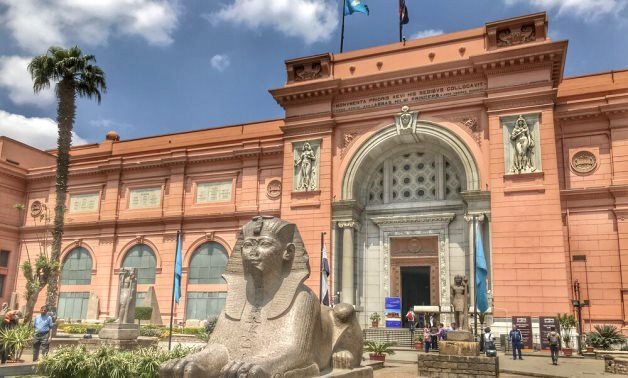
We toured the Egyptian Museum 2 days ago and I have putting off writing this post because I didn’t know what to say. There is no way for me to describe what I saw or to convey the feeling you experience when you see such beauty. There will be a new museum, Grand Egyptian Museum (GEM), opening near the Giza Pyramids “soon.” It was scheduled to open last October, then in April and then who knows. It is reported that the new museum cost over a billion dollars. On display will be all 5,000 pieces taken from the tomb of King Tutankhamun. It will be able to handle 15,000 people a day, in contrast to the current museum that handles at most 7,000 per day and not very well.
Before going to the Museum I knew that they had moved many of the treasures to the new museum so I did not know what to expect. I was not disappointed.
The #1 thing to see in the museum is obviously the gold mask of King Tut. All of his exhibits are in a darkened room where no photography is allowed. You are only allowed to be in the room for a very short time and it is impossible to read all the descriptions of the artifacts. Also on display is his inner coffin. Obviously I could steal pictures off the internet but you all know what it looks like.
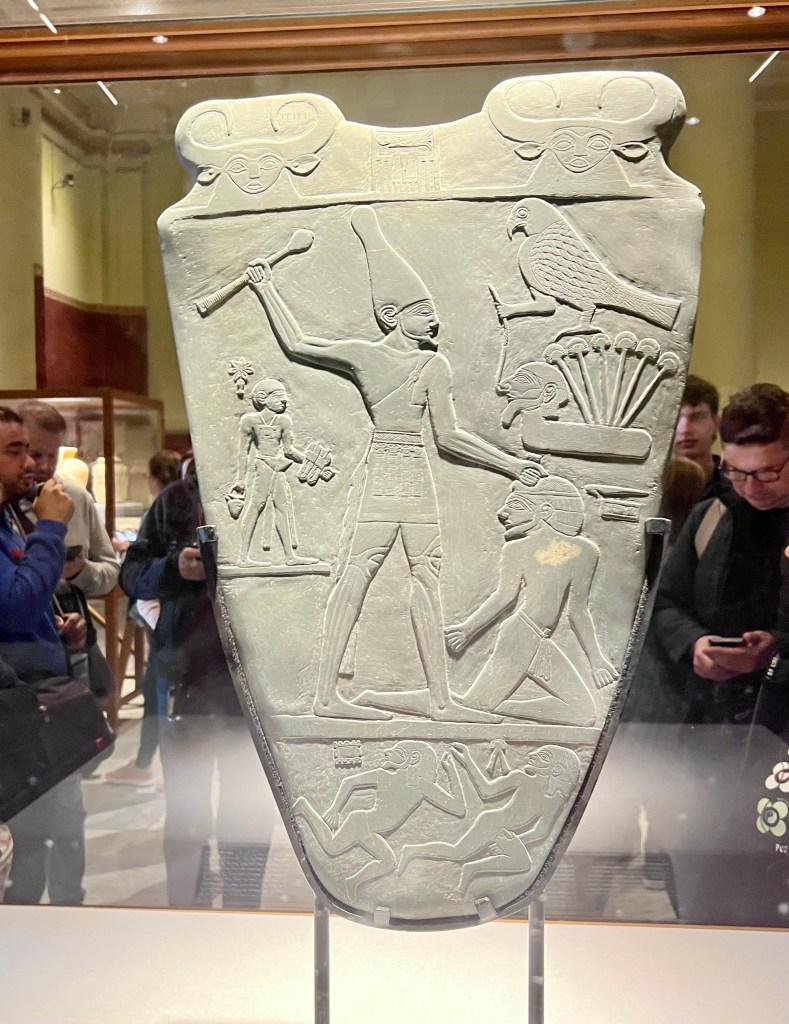
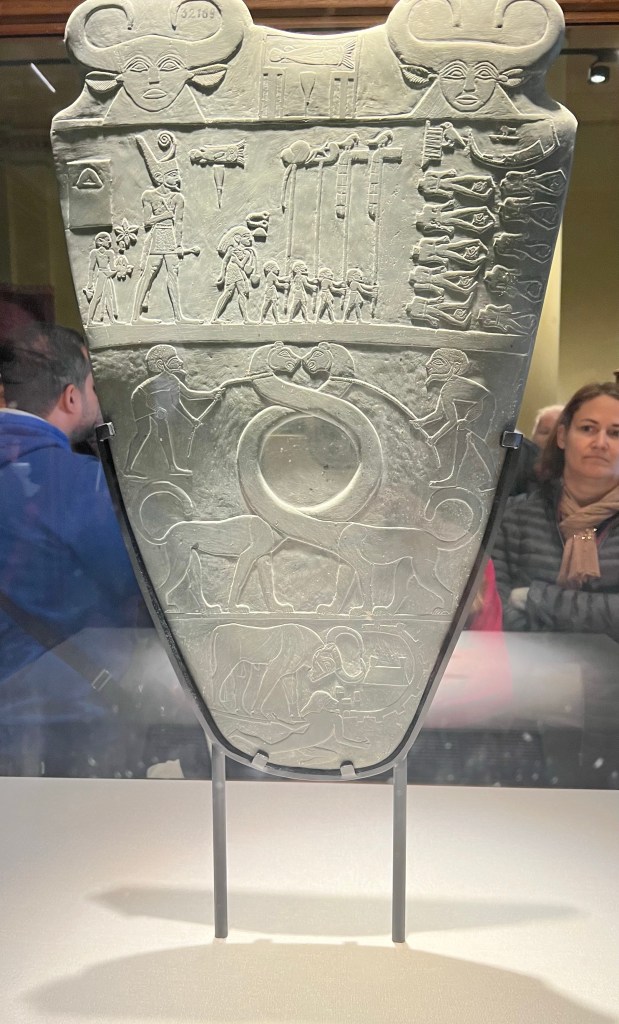
The next most significant thing is called the Narmer Palette and is considered the 1st historical document in the world. It depicts the unification of Upper and Lower Egypt. I never realized that Lower Egypt was the northern part of Egypt and Upper Egypt was the southern part of Egypt. A great trivia question.
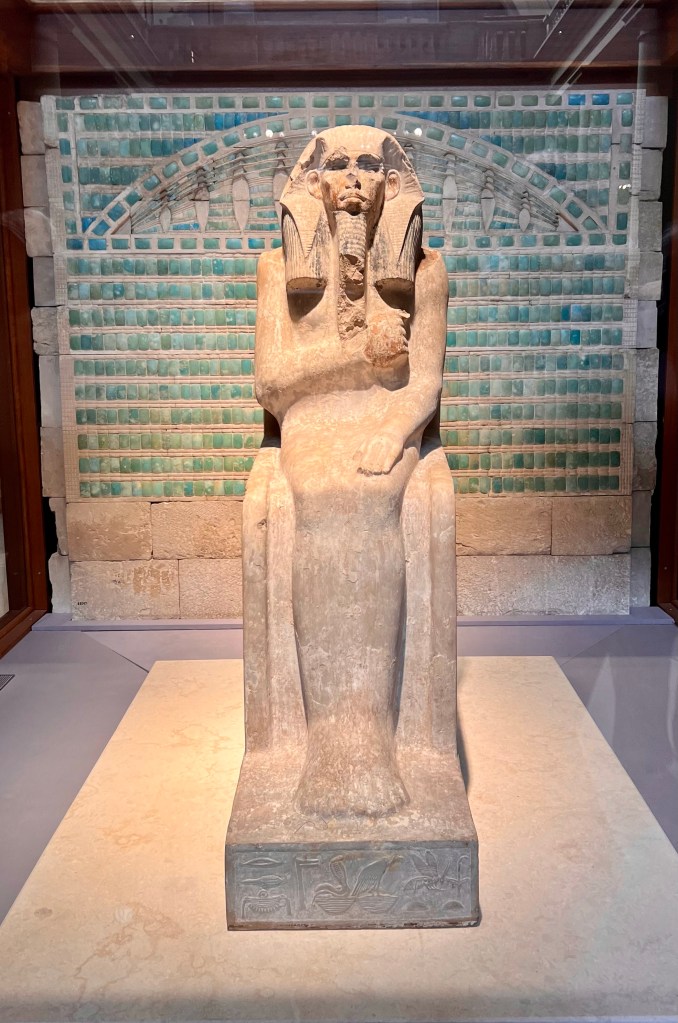
#3 is the painted statue of King Djoser who is known for the Step Pyramid. See my post, Pyramids, Pyramids, Oh My! for more information on King Djoser.
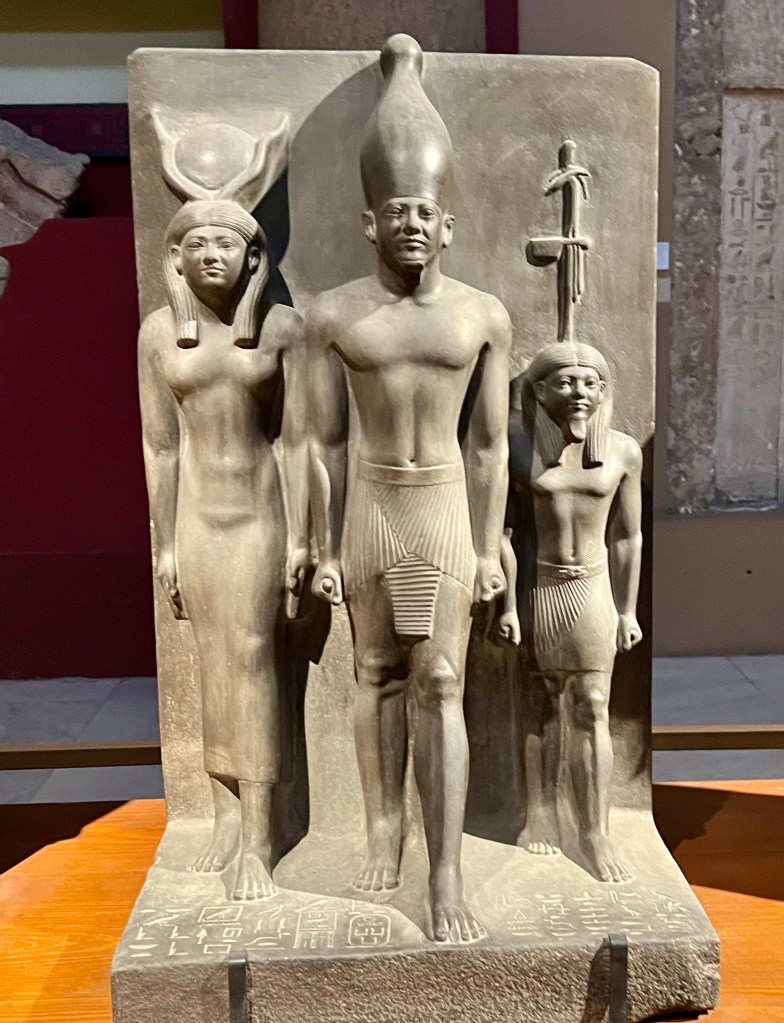
#4 is the Menkaure Triad (Old Kingdom). King Menkaure was the builder of the smallest pyramid at Giza. He is pictured wearing the Crown of Upper Egypt and is flanked by Hathor, the sky goddess and Put, the cow goddess.
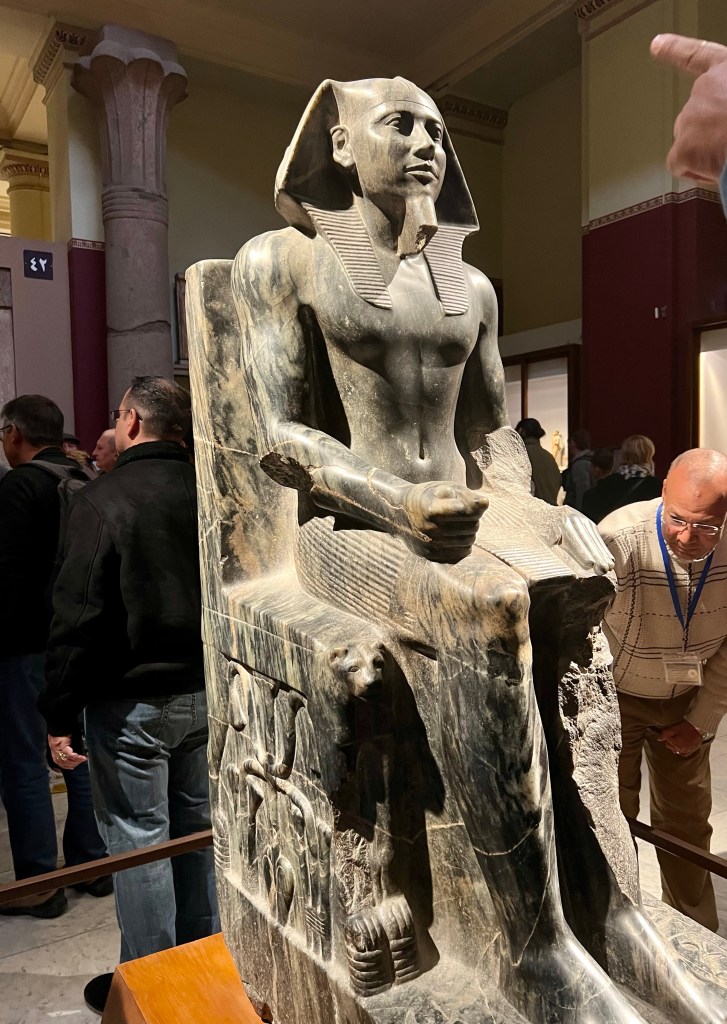
Next up is the Statue of Khafre (Old Kingdom) who built the 2nd largest Pyramid at Giza and the Sphinx.
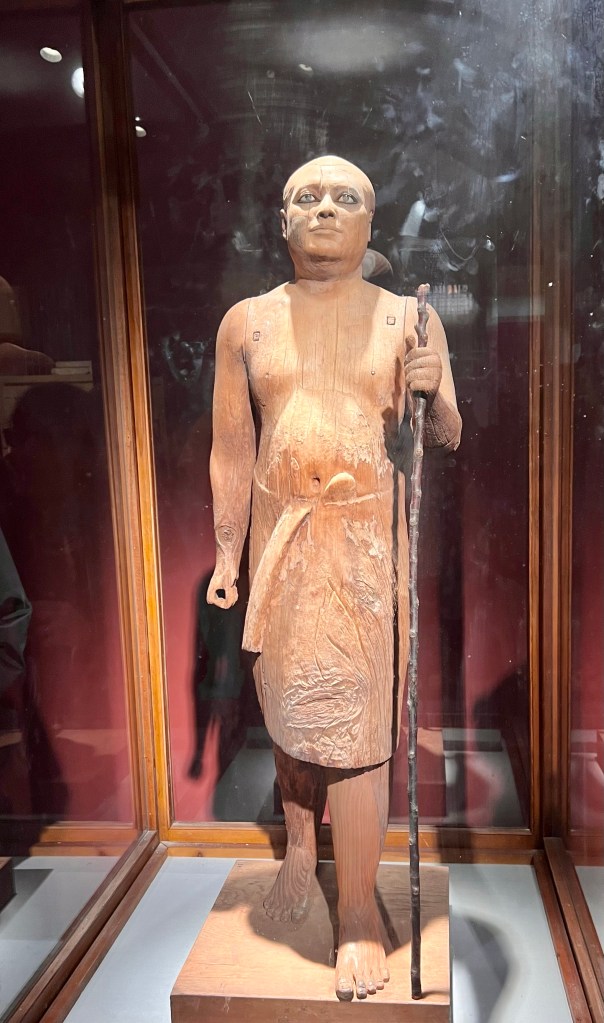
Statue of Ka-per, aka Sheikh el Balad (Old Kingdom). This is a statue made out of sycamore that is so life like that it is scary. Ka-per was an ancient army scribe and priest who lived about 2500 BC. He was discovered near Djoser’s Step Pyramid.
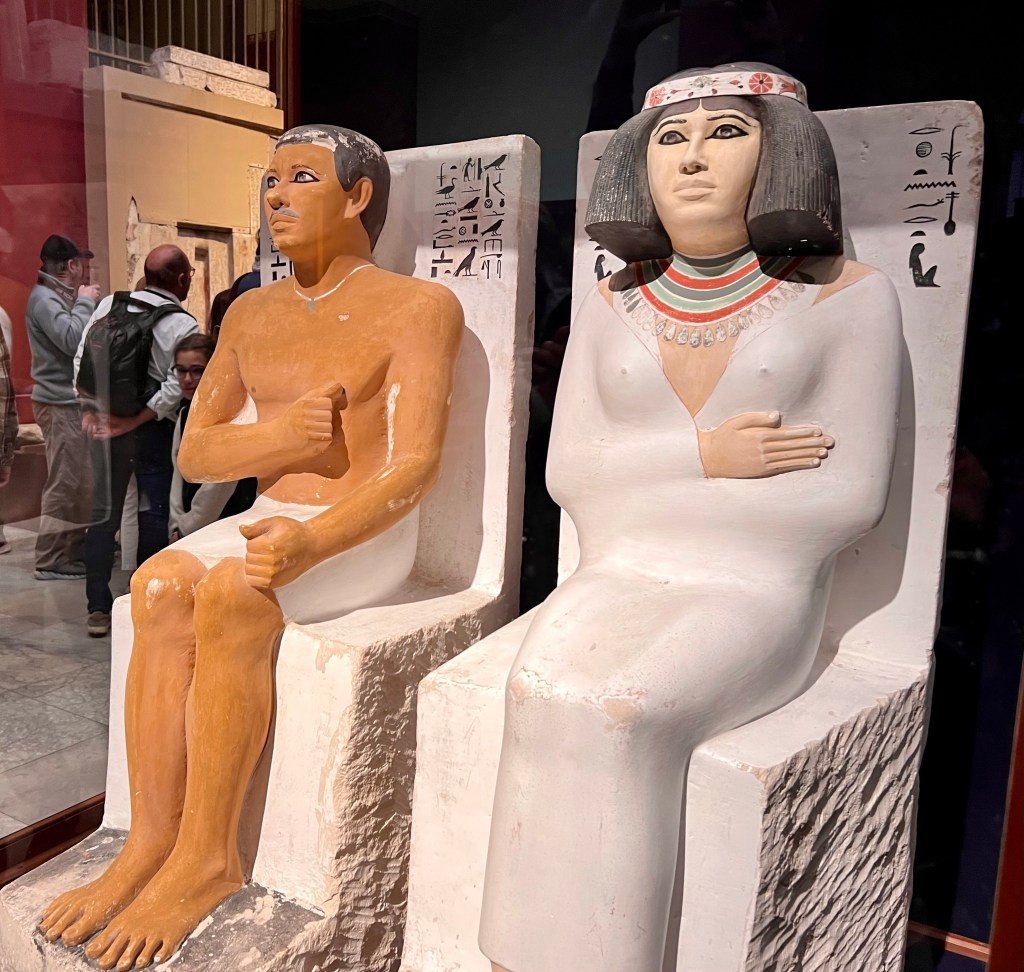
The Statue of Rahotep and Nofret (Old Kingdom). Prince Rahotep and his wife Nofret are made of painted limestone and were discovered in 1871. Reportedly it scared the excavator who discovered the statue using a candle for light because of the realistic portrayal.
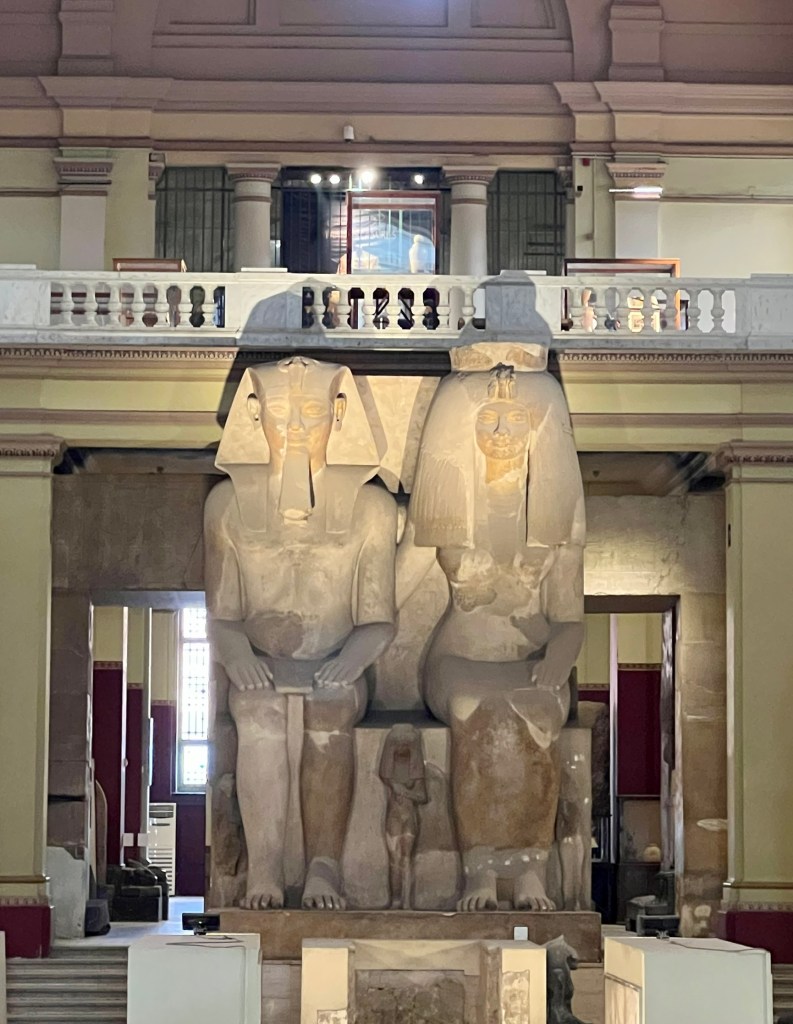
This is the centerpiece of the Egyptian Museum. The Colossal Statues of Amenhotep III and his wife, Tiye and their 3 daughters. He is best known for building the Temple at Luxor.
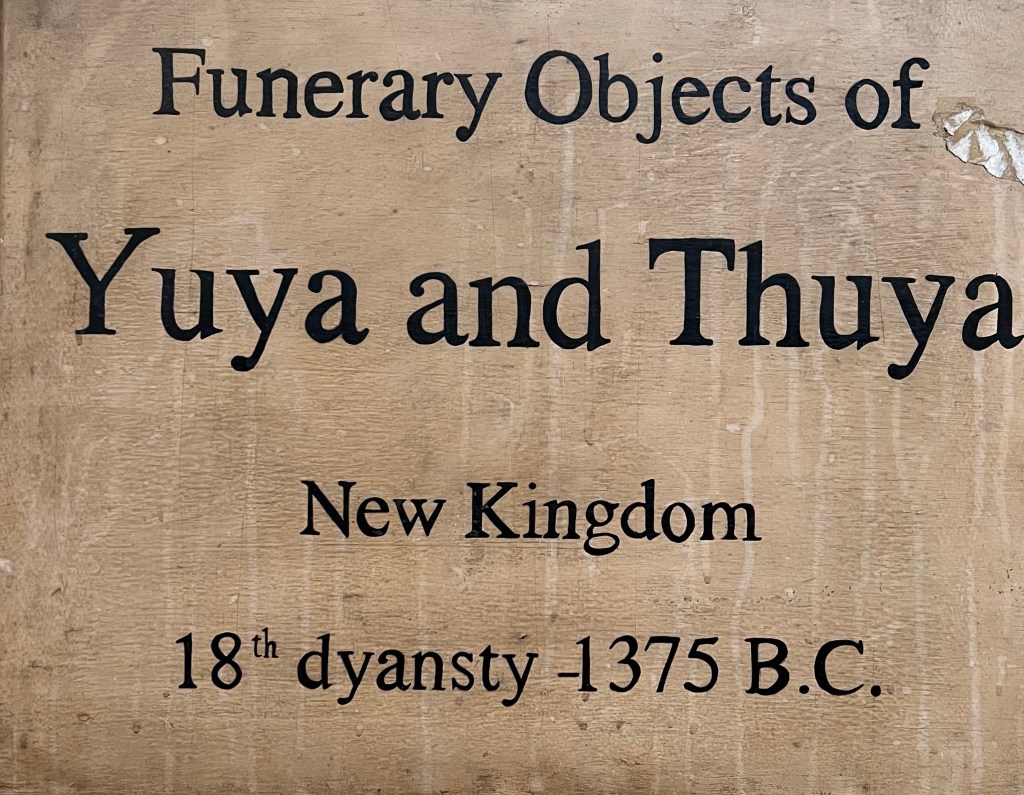
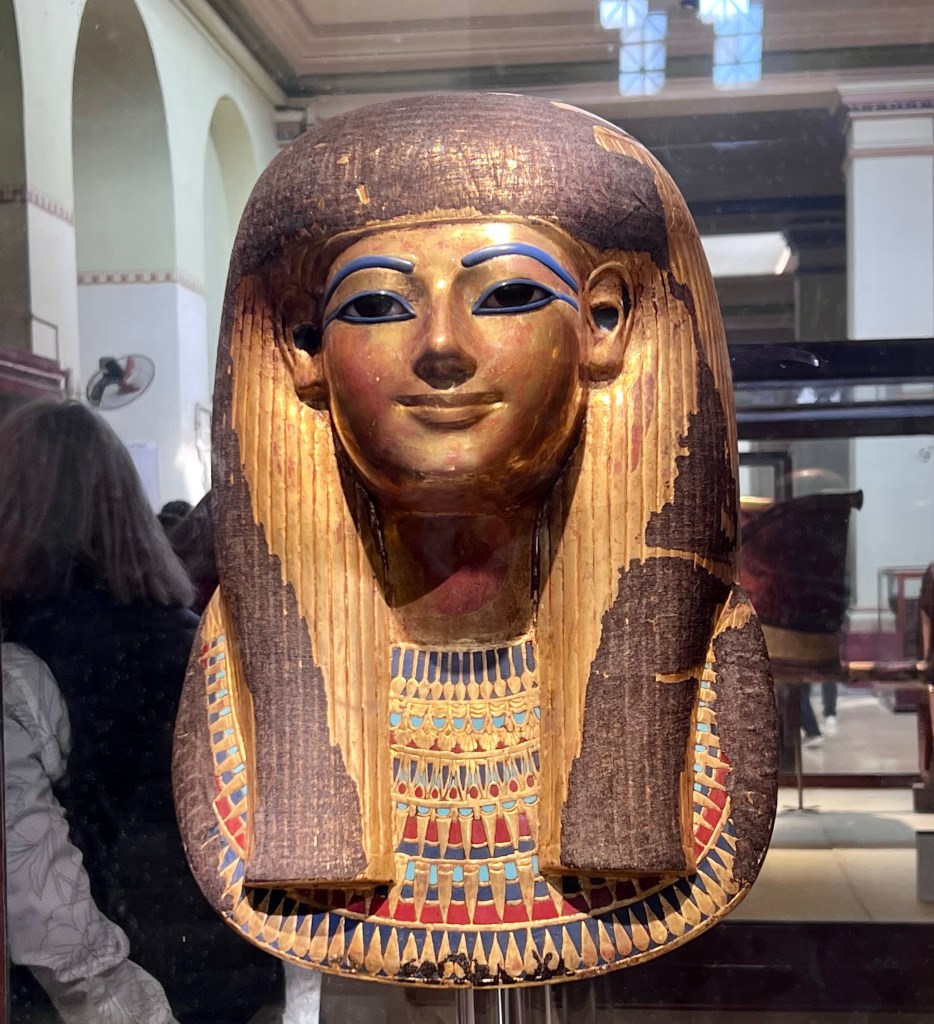
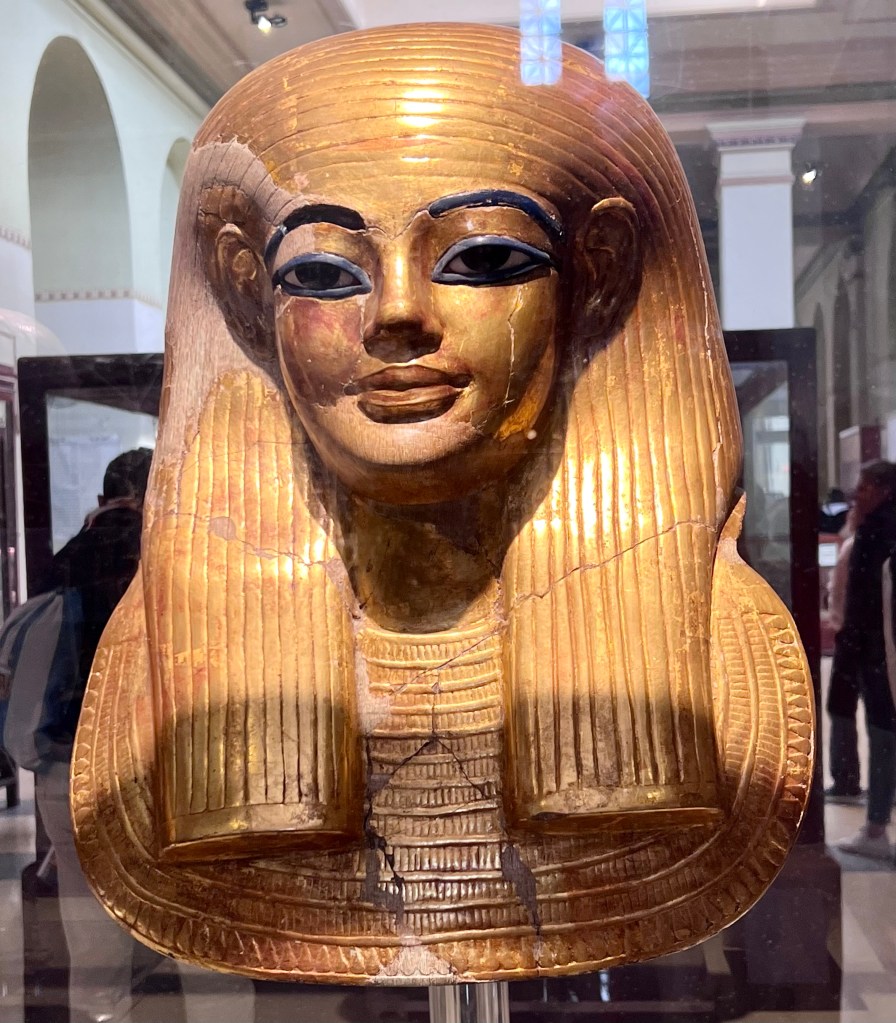
The Funerary Masks of Yuya and Thuya. They were discovered in 1905 in the Valley of the Kings. They are believed to be either the grandparents or great grandparents of King Tut. The masks they were wearing were made of cartonnage which is layers of linen or papyrus, covered with plaster and then gilded in gold. Yusuf was a powerful Egyptian courtier in the 18th dynasty.
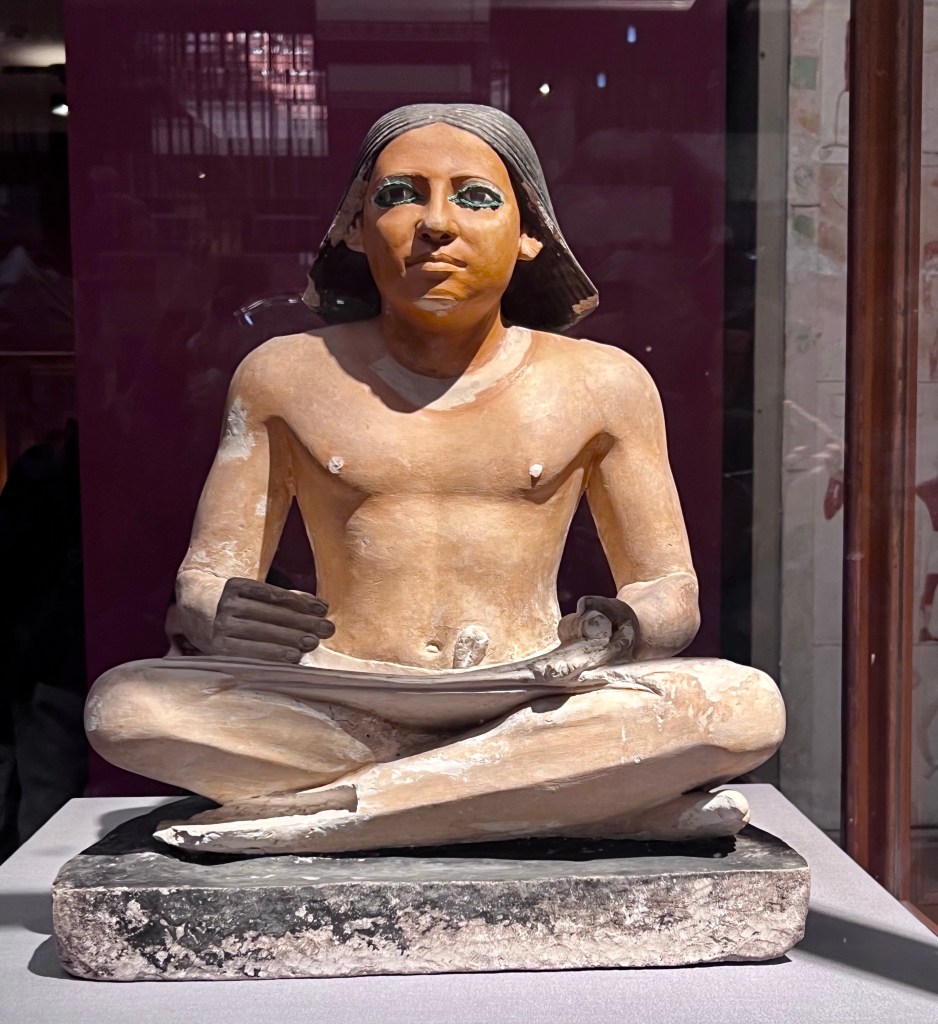
Next up is the Statue of the Seated Scribe from the 5th Dynasty, 2400 BC. It was found in a tomb in Saqura. The detail is amazing and his eyes look real as they are jeweled.
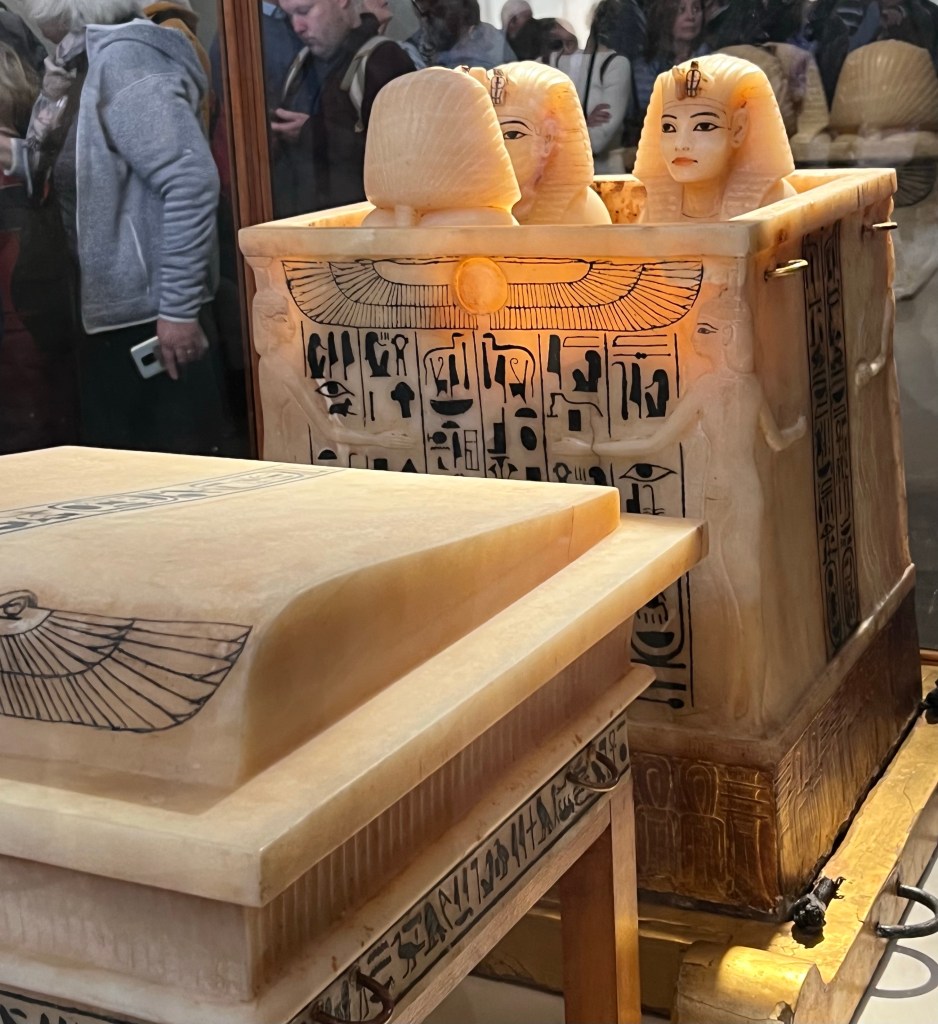
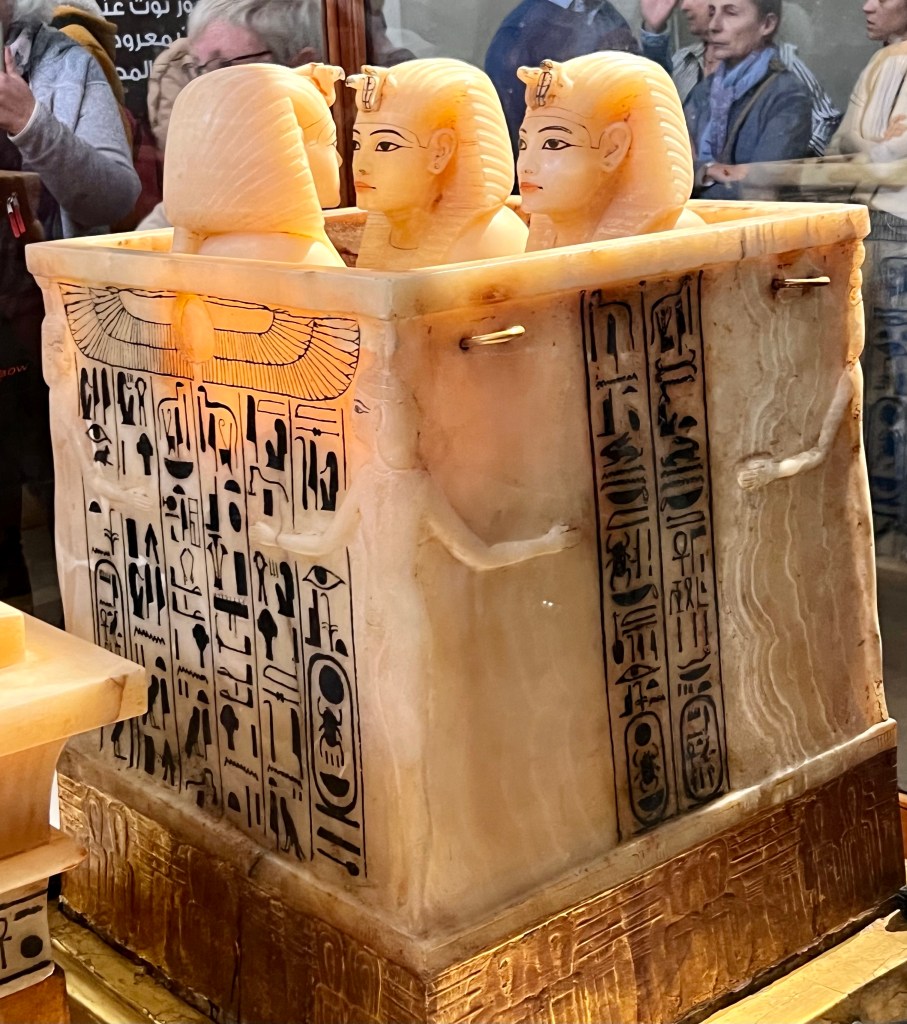
The Gold Chest and Coptic Jars from the tomb of King Tut. Coptic jars were used in the mummification process to store the internal organs of the dead. Each jar held a specific organ. The heart, however, was left in the body.
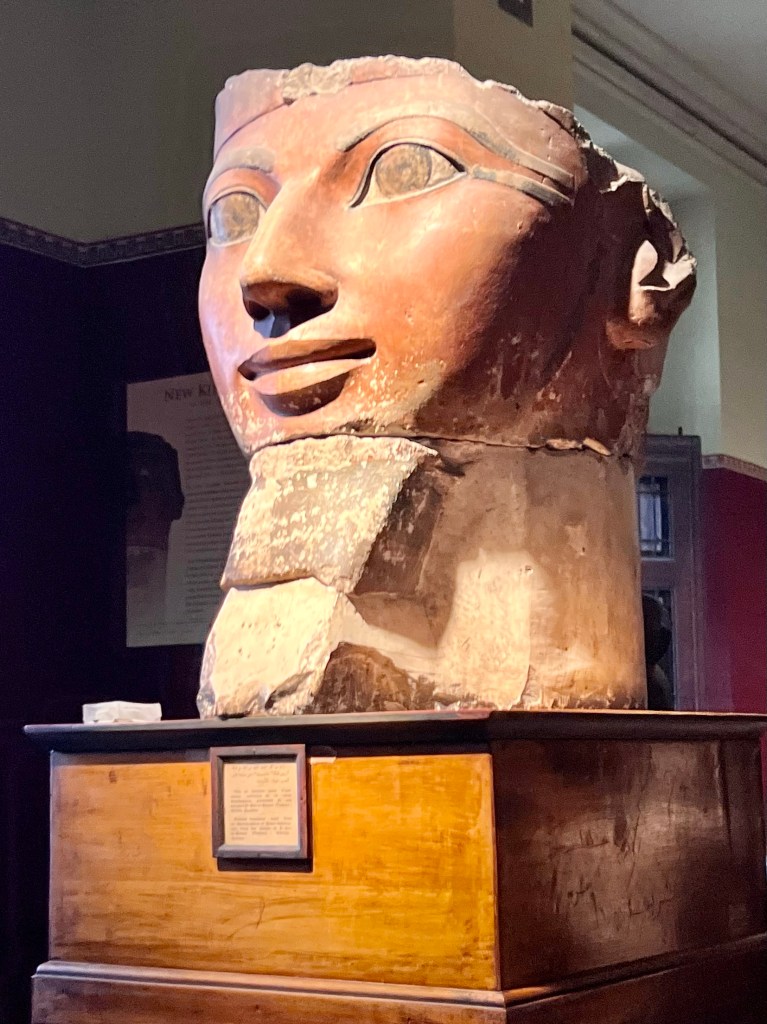
Head of Hatshepsut who reigned from 1473 to 1458 BC and is considered to be the only female Pharaoh. She wears the Red Crown of Lower Egypt (or at one point she did) and the ceremonial false beard of the Pharaoh.
When I first starting writing this I googled what are the most important things to see in the Egyptian Museum and our guide made sure that we saw everyone of them and more. Believe me I have lots more pictures but these are the true high lights
I am sure you will never guess what happened next? Museum Gift Shop shopping. My favorite place to shop. I can’t even count how many things are in my house from museum gift shops. It was a light shopping trip. I bough mosaic coasters, inlayed mosaic earrings and a gold and black bracelet. Just helping out the Egyptian economy.

 On The Road With The YaYa's
Leave a comment