We checked out of our hotel with the plan to visit a local family for lunch. On the way our guide saw women selling their baskets and rugs by the side of the road. He had our drivers stop and gave us a chance to talk to these delightful women.

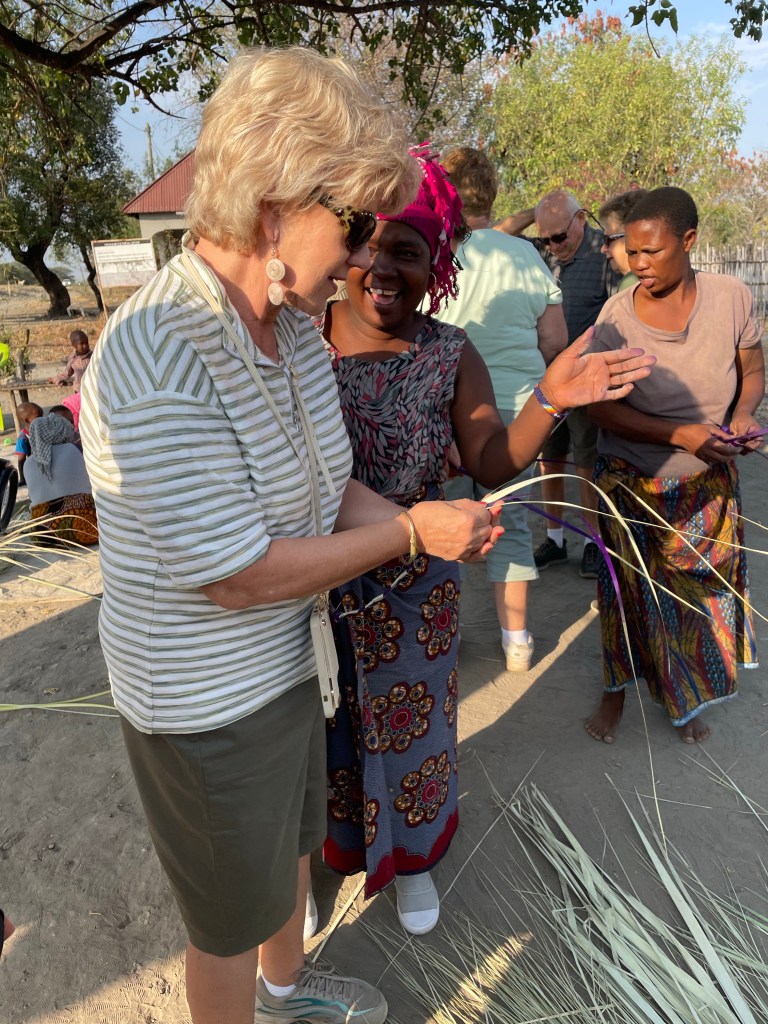
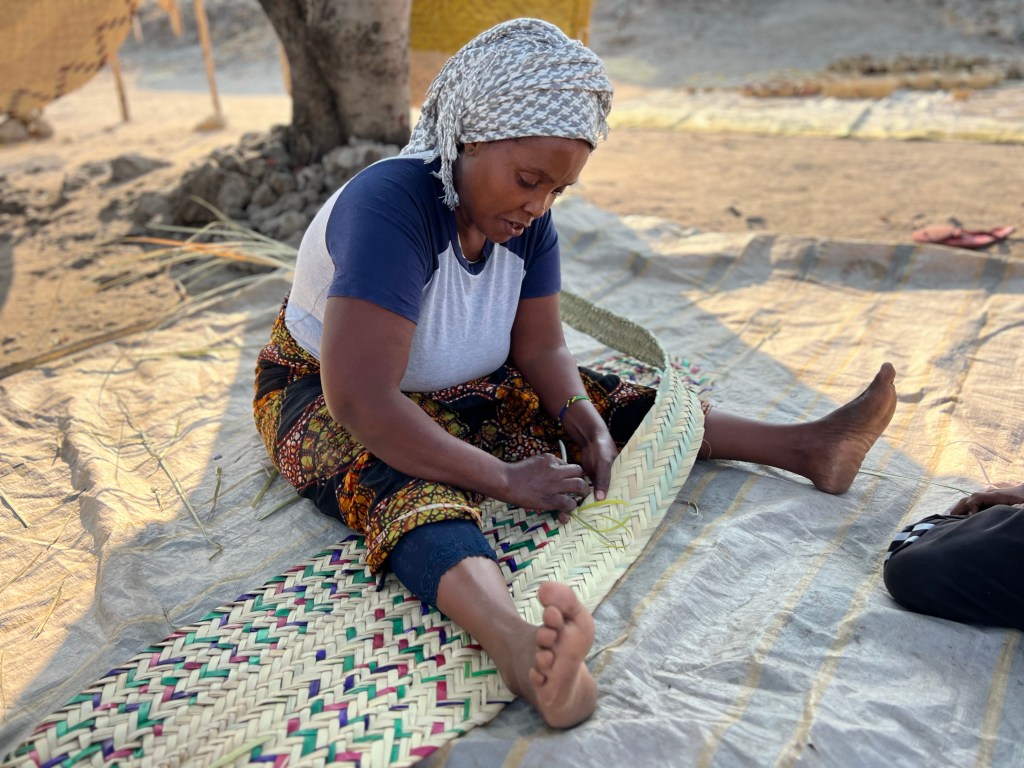
They make all their wares from palm fronds that they dry, cut and then dye with natural plant dyes. The finished products were gorgeous and very reasonably price. Therese and I decided that it would be fabulous to sell them in our new Habitat store, the Creative Emporium. We picked out lots of pieces and I asked out guide to tell the women our story and the mission of our store. She significantly lowered the prices on all the items. So heartwarming when you know this women were working so hard to feed their children and pay to send them to school, BTW – I had to buy another suitcase to bring everything home.
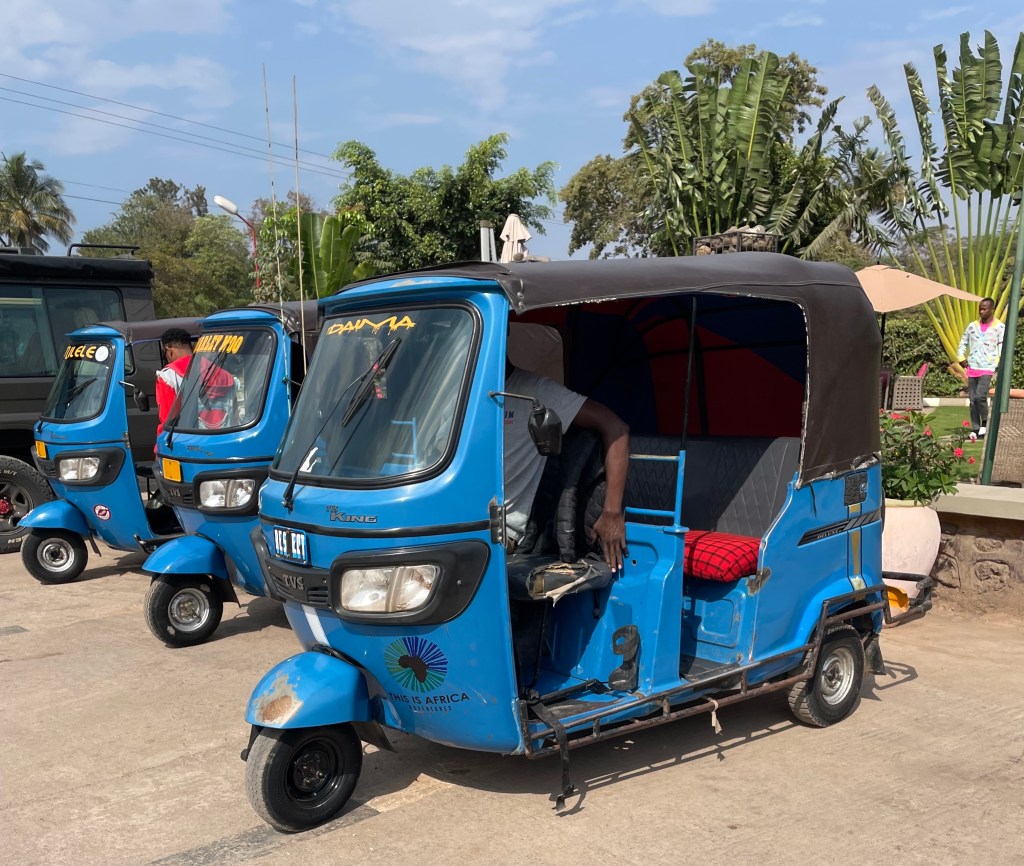
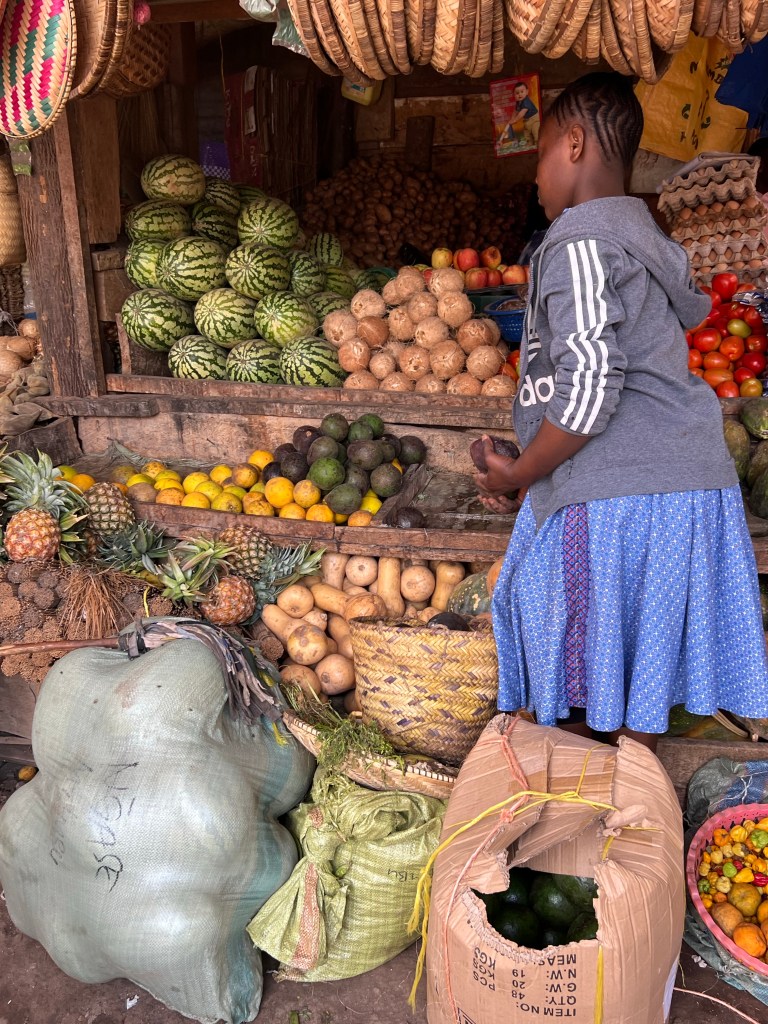
Next stop was the bustling little town of Mto Wa Mbu Village where we were tasked of going to the market and buying food to bring to our home hosted dinner. Our guide gave us money and the name of what we had to buy in Swahili. Eileen and I kept saying the words over and over again so we wouldn’t forget. We were given the most money so we knew it had to be something big, We all got in these little “Tuk Tuks” that are basically motorized 2 seater carts with a driver in front.
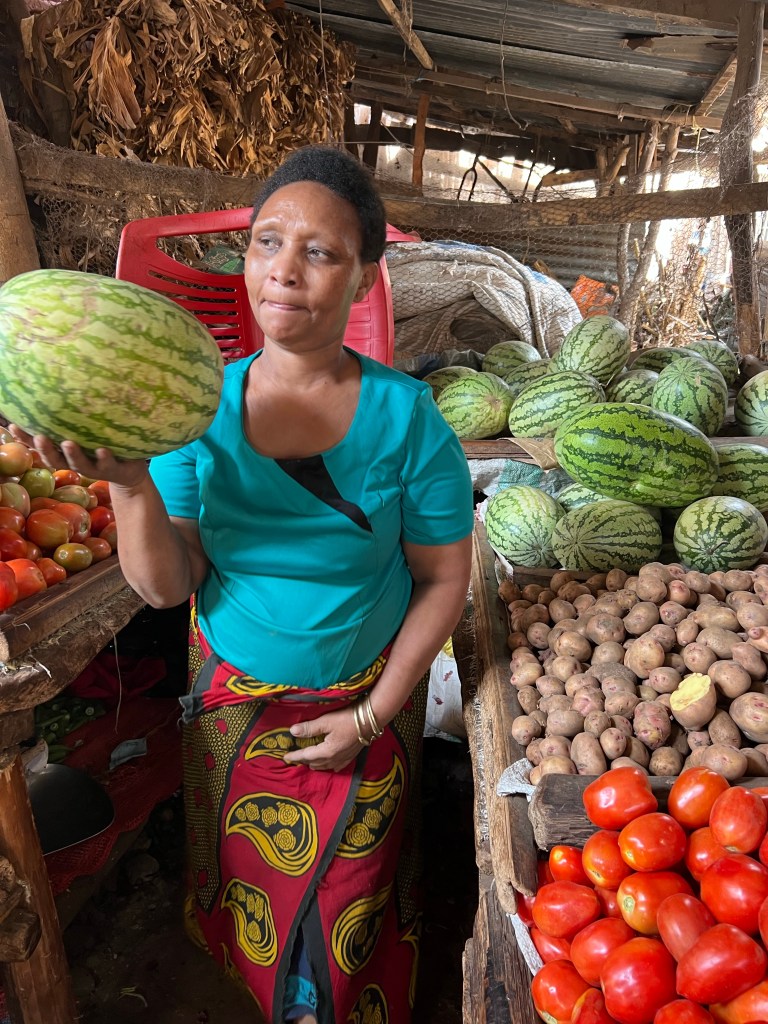
When we went into the open air market, I asked the first woman I saw for a tikti maji and she gave us a watermelon. Eileen paid and off we went.
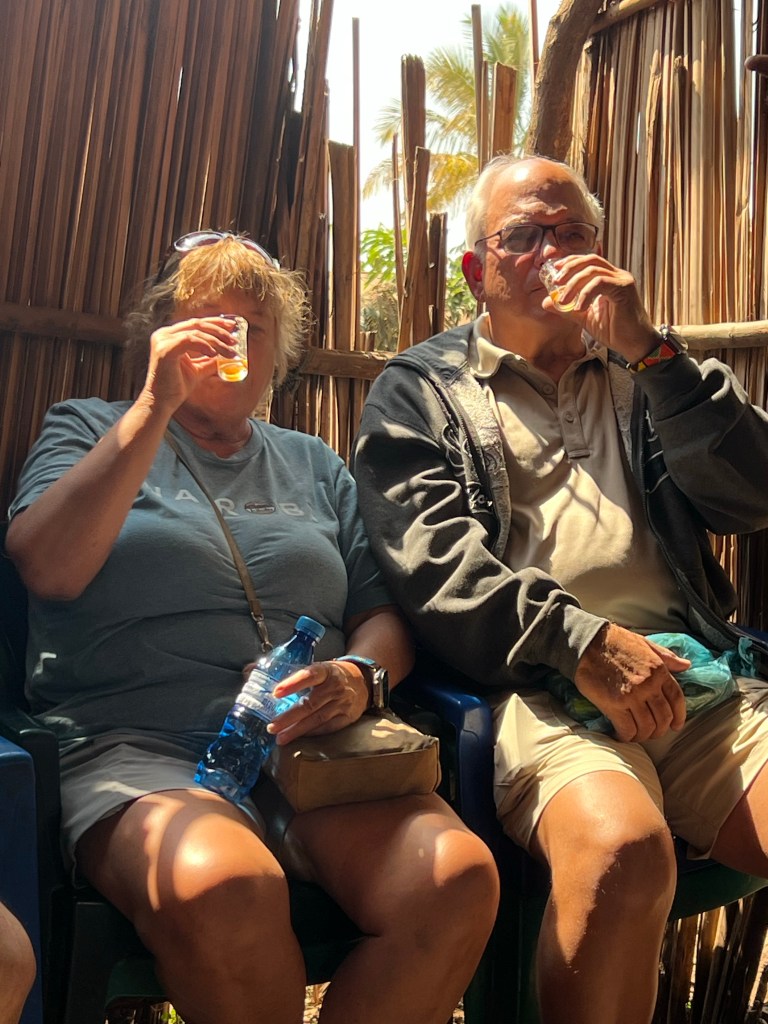
From the market we stopped at a “bar” and we were served a beer made of fermented bananas. Since I hate bananas, I passed. It looked absolutely disgusting.
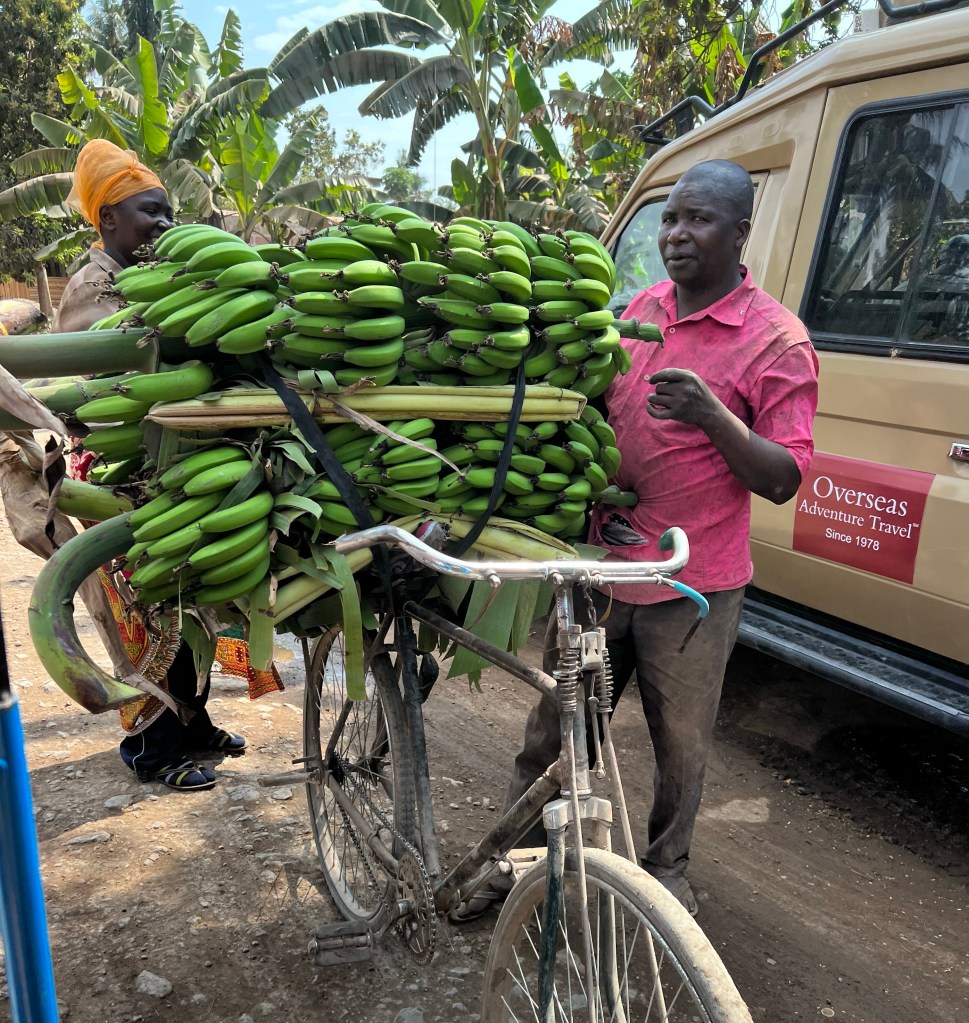
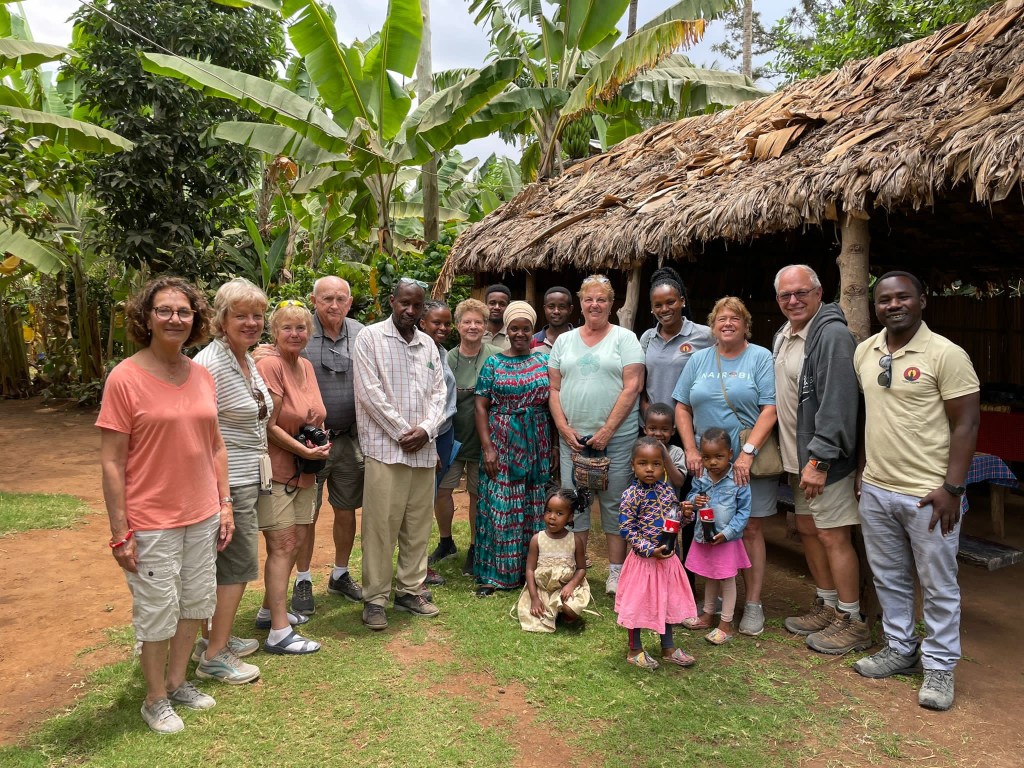
Next stop was the home of Papa and Mama Frank who invited us into their home to see how a traditional low income family lives. From the looks of the outside of their home they didn’t look like they were low income but our guide said they were. Delightful people who had 3 sons and 1 daughter, who was away in boarding school. The oldest son had a wife and two children and they lived at home. Two younger unmarried sons also lived there. We told them a little about our selves and they asked questions about life in the US. After a brief tour of their beautiful home we went outside for a tour of their banana farm. Mama Frank prepared a wonderful lunch for us. They had a large covered outdoor dining area that we ate under. Our group sat at every other place setting that allowed us to have personal contact with the family. Their questions of us were very thoughtful and sometimes provocative. An absolutely wonderful experience that made this trip much more than just chasing after animals. The human connection was so special.
We returned back to our hotel and several of us walked to a small family owned coffee plantation to learn how coffee was made. The family hires local people to pick the beans when they are ripe. They are all picked by hand and when they are red they are ready to be picked. They are called coffee cherries. Unfortunately not all the beans on the whole plant are ready to be picked at the same time. After the beans are picked they are put into a hand cranked machine that separates the bean from the pulp. We tasted the pulp and it was very sweet.
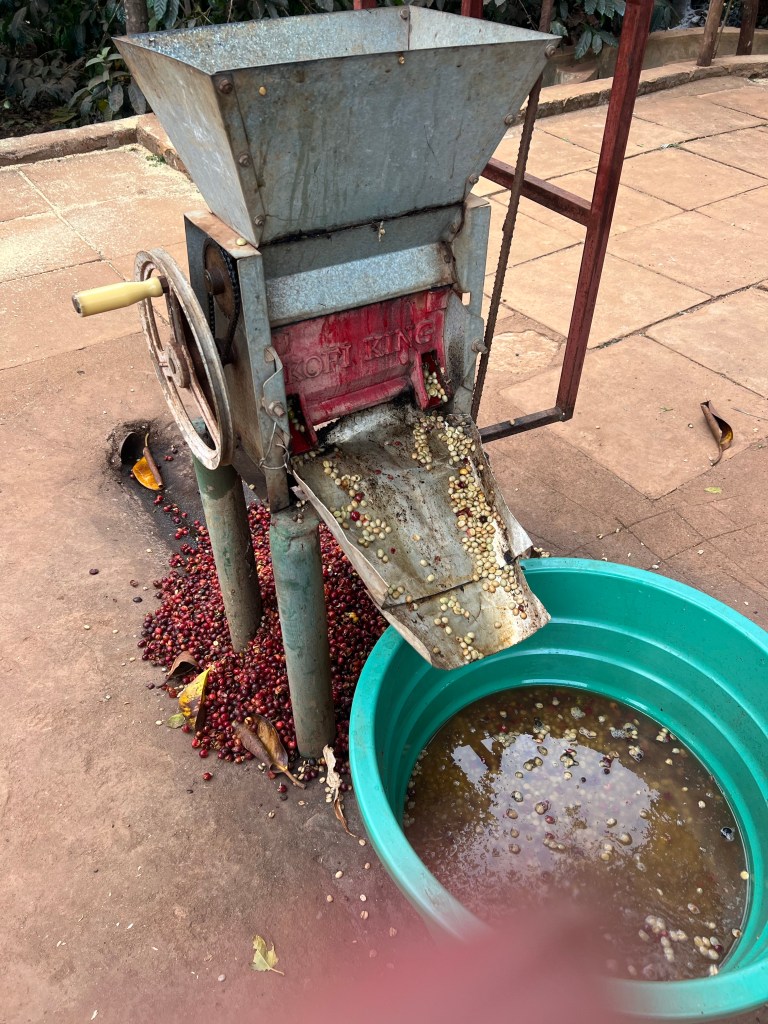
The beans are then put into a fermentation container for 24 to 48 hours. After that they are placed on a drying rack for approximately 1 week.
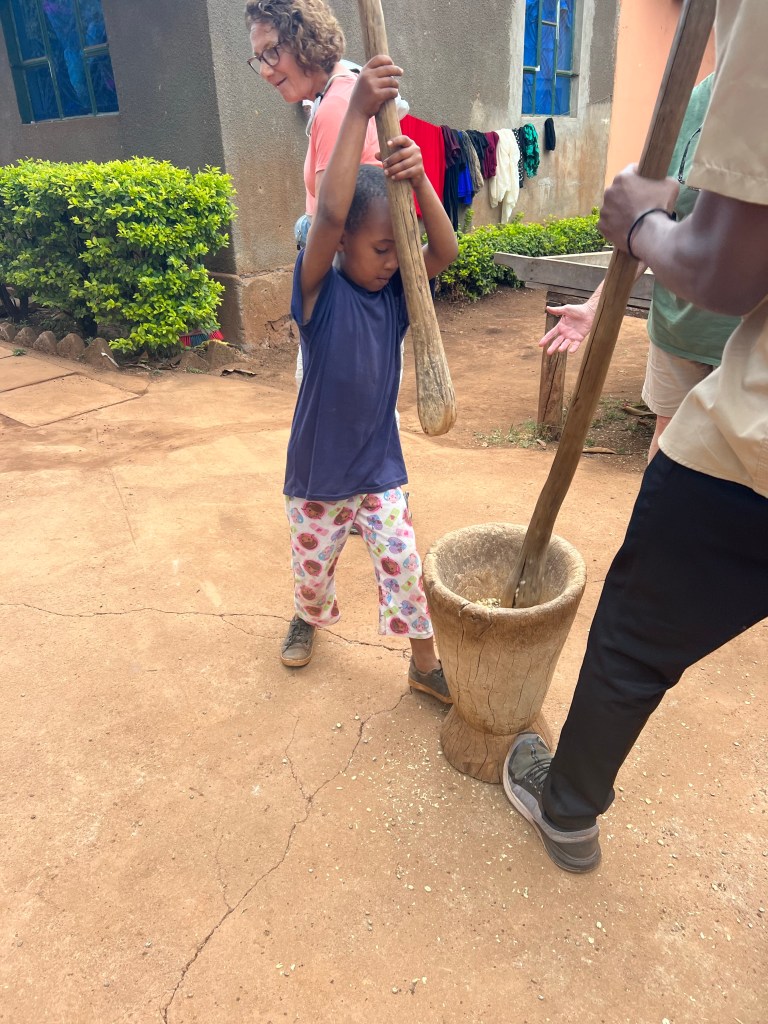
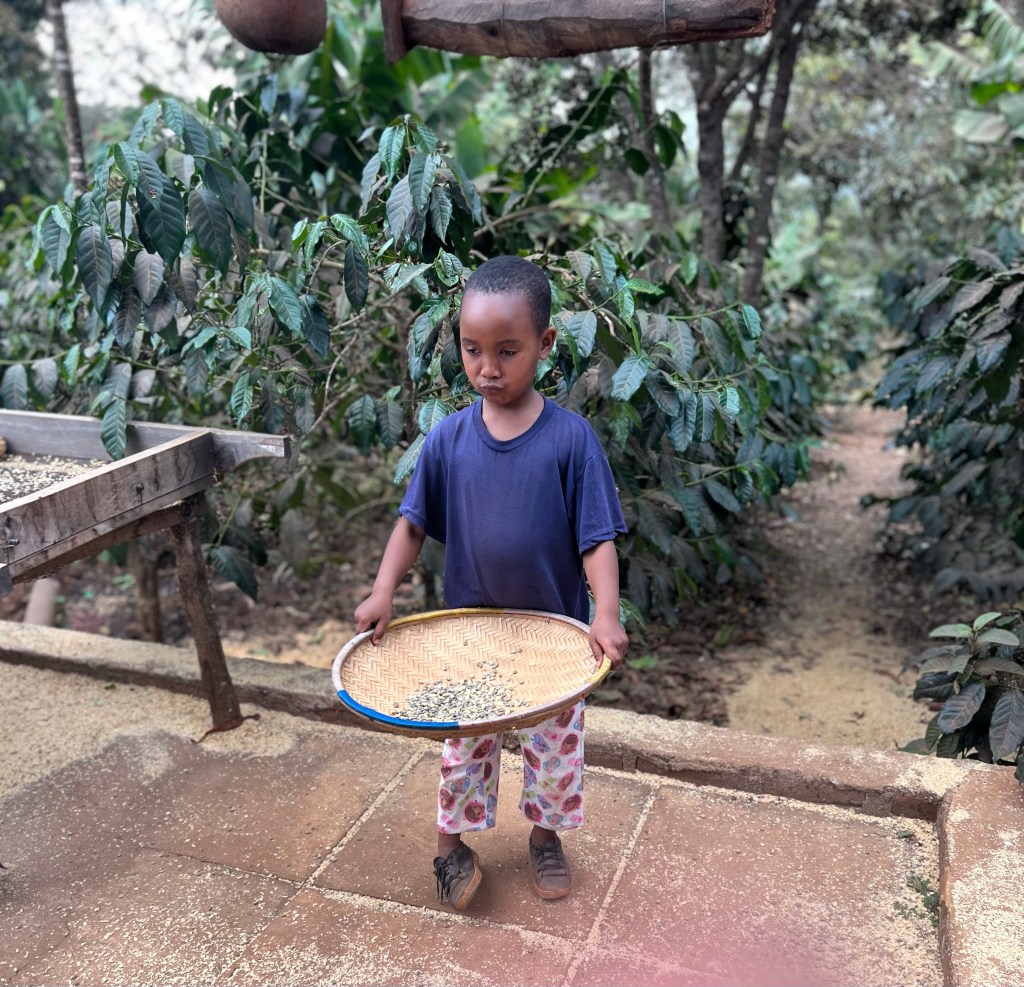
The beans are then put into a mortar and pestle and basically pulverized. They are then separated from the hull by shaking them in a basket. This is the owner’s six year old daughter, Elizabeth, who is shaking the basket.
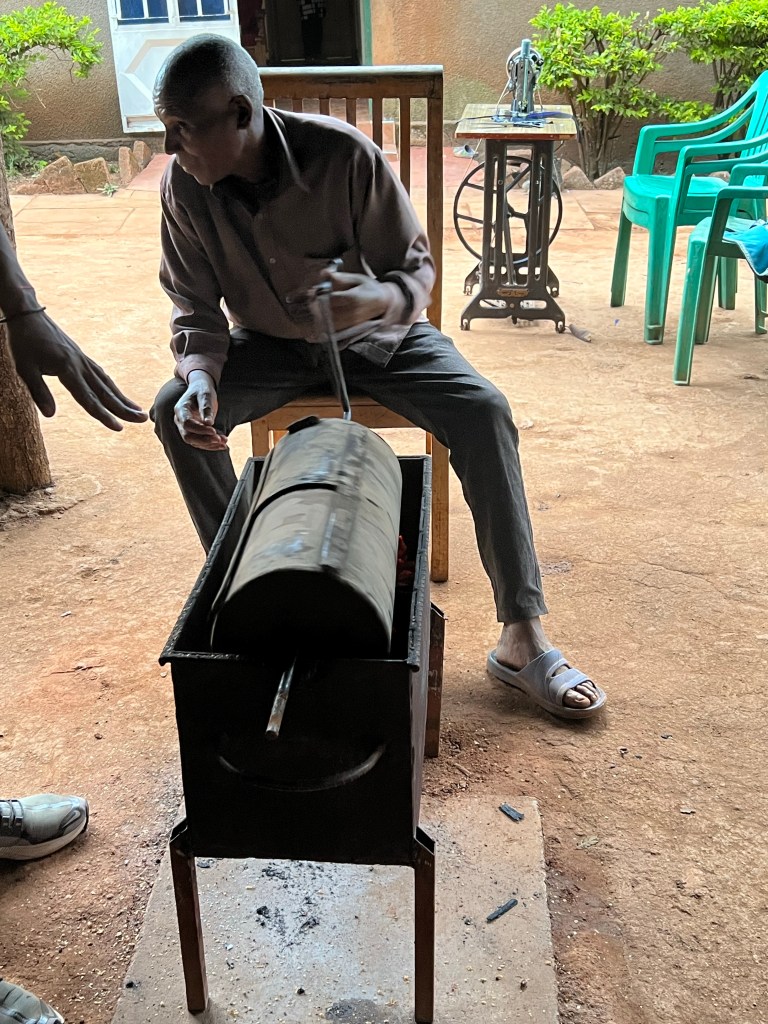
The next step is that the beans are roasted over a charcoal fire for 45 minutes. The basket must be turned continuously or the beans will be burnt. This is the grandfather and the original owner of the coffee plantation. He is the only one who is allowed to roast the coffee.
Finally the coffee is ground and ready to drink.

Next up the Ngorongoro Crater.


 On The Road With The YaYa's
Leave a comment